
2nd Symposium at SRH University of Applied Science Berlin
Summary
Speakers
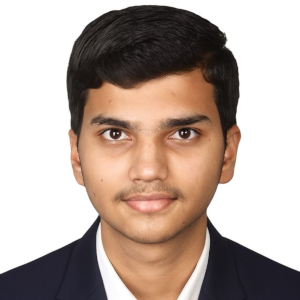
Sarthak Shaha
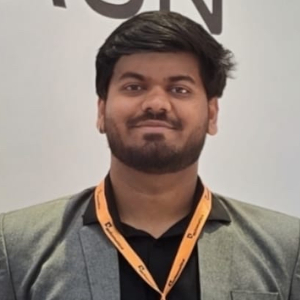
SRH Student, Industry 4.0Om Chandavale
SRH Student, Industry 4.0Ed Freyfogle
Co-founder, OpenCageCristian Vizitiu
Head of Space Applications for Human Health and Safety Department, PhD in Systems Engineering
Mara Diaconu
Vice President


Program
23rd-GeoITTalks
15:00 - 15:20

15:20 - 15:30
Opening by the Academic Director TEAC
Introduction of the SRH University of Applied Science

Prof. Dr. Michael Hartmann
15:30 - 16:00
Introduction to ROS and its Application in Robot Controlling
The Robot Operating System (ROS) is an open-source framework designed to facilitate the development and control of robotic systems. It provides essential tools for hardware abstraction, inter-process communication, and modular... Read More

Abhiraj Malik

Karan Chauhan
16:00 - 16:30
Developments in Airborne Search and Rescue Missions with Associated Geospatial Challenges and Solutions
Advancements in airborne Search and Rescue (SAR) missions are increasingly shaped by the integration of geospatial technologies and data analytics to address complex operational challenges. This presentation explores recent developments... Read More

Christian Janke
16:30 - 17:00
17:00 - 18:00
Coffee Break (Flight Simulator)
18:00 - 18:30
LIDAR/Inertial-based Navigation Methods for Autonomous Drone Operations in GNSS-denied Urban Environments
Over the last years, the number of applications for drones has grown significantly, driving interest in techniques to ensure safe operations, particularly in challenging environments like urban areas and with... Read More

Anne-Sophie Polz
18:30 - 19:00
Smart Agriculture Technologies
Computer vision technologies are increasingly applied across diverse fields, from object detection to complex analytical systems. In agriculture, methods such as thermal and short-wave imagery enable the monitoring of plant... Read More

Lukasz Rojek
19:00
Closing Discussion
24th-GeoITTalks
16:00 - 16:10
16:10 - 16:30
Innovation Mindset for the Digital Age: Bridging Research, Technology, and Society
As geospatial technologies, AI, and digital transformation reshape economies and societies, the role of innovation and technology transfer becomes essential. The challenges are not only technological but also cultural and... Read More

Mara Diaconu
16:30 - 16:50
Space Applications for Human Health and Security: Overview on Specific Telemedicine and Search & Rescue Solutions
This presentation explores the integration of space technologies, as SatNav, SatCom, geospatial intelligence, into innovative solutions that enhance human health, safety, and security in challenging environments. Drawing on my experience... Read More

Cristian Vizitiu
16:50 - 17:10
The Joy of Geocoding
The Joy of Geocoding – a look at the pleasures of the most basic of geospatial operations as gained in more than ten years of operating the OpenCage geocoding service.

Ed Freyfogle
17:10 - 17:30
Coffee Break
17:30 - 17:50
MEDIBOT – The Vision – Guided Robotic Arm for Medical Dispensing
MEDIBOT – The Vision-Guided Robotic Arm for Medical Dispensing Machine, that combines AI, robotics, and IoT to make medicine dispensing faster, safer, and more accurate. When a customer provides... Read More

Sarthak Shaha

Om Chandavale
17:50 - 18:15
Discussion and Closing Speach
This is the moment to look ahead and shape the next steps together. In the closing session, we will reflect on the key insights of the day, discuss future directions... Read More
Lukasz Rojek
18:15 - 20:00
Networking
25th-GeoITTalks
17:00 -17:10
17:15-17:30
GeoIT COST Action
Mara Diaconu
17:30
Speakers Session
Lukasz Rojek
17:30 - 18:00
Open RTLS: Building an Indoor Mapping Ecosystem for RTLS
Real-Time Location Systems (RTLS) enable real-time tracking of assets and people in indoor environments and are increasingly used in logistics, manufacturing, healthcare, and smart buildings. Despite growing adoption, the RTLS... Read More
18:00 - 18:30
Automated 3D measurement and monitoring of plants using a robot-assisted thermal imaging camera.
Dieser Vortrag präsentiert ein automatisiertes, selbst entwickeltes System zur dreidimensionalen Vermessung von Pflanzen. Zu diesem Zweck wurde untersucht, inwiefern sich eine Wärmebildkamera verwenden lässt, um auf Grundlage von Thermaldaten physiologische... Read More
18:30 - 19:00
A Simulated Demonstration of a Multi-Robot Swarm Using ORB-SLAM in ROS2 with Centralized Map Merging to Reduce Drift
This presentation discusses a ROS 2–based multi-robot exploration and mapping framework developed for indoor environments, with a focus on improving efficiency, coordination, and localization robustness in autonomous swarm robotics. The... Read More
19:00 - Open End
Networking
9th-WhereCamp
Opening by GeoIT.org President
Introduction to Autonomous Driving: Open sourced and managed.
Prof. Dr. Roland Wagner

10:20 - 10:40
TU Lichthof
Scenic Routing
Routing has become an important part of everyday life, whether it is finding the fastest way to work, avoiding traffic jams or road blocks, or finding the most efficient route... Read More
Demand Modelling Based on Geostatic Data Calibrated Using Mobile Network Data
Information on how people move within urban areas enables a wide range of application. Shared mobility companies can use this information to optimize their business areas, public transportation companies can... Read More

Jesse Hinrichsen
Smart Manufacturing and Industrial RTLS
Nowadays location-based services are ubiquitously been used, for navigation, planning and control of all the different means of transportation out there, even autonomous once. This is also true for the... Read More

Dr. Matthias Jöst
Design Patterns of GeoData Driven Apps
Modern geospatial applications are becoming more and more complex. Whether it be an application for self driving cars or prediction engine for energy forecasting the number of moving pieces are... Read More

Shoaib Burq
Indoor Wayfinding With The New Generation of Google Access Points
Wi-Fi RTT allows the system and apps to “measure the distance to nearby RTT-capable Wi-Fi access points” with high precision (around 10 cm in Line-of-Sight). This feature was introduced in... Read More

Damir Zambelli
Improving Mobility for Events
Organising events is already hard enough. From finding the perfect location to booking the best acts, there is so much that requires an event manager’s attention. With triply, we enable... Read More

Chris Stelzmüller
Infrastructureless Indoor Positioning & Navigation

Sebastian Schuster

Matthias Rosken
13:00 - 13:40
Lunch Break

Panel Discussion
Prof. Dr. Roland Wagner
Mapping Driver Cognitive Load
Using a mix of static map data, weather and real-time traffic, we compute scores for complexity and risk of specific road situations. These scores are then used to adapt the... Read More

Markus Gräser
Automated and Connected Driving in Berlin-Reinickendorf
Objective In the research project SAFARI, the Land of Berlin together with partners examines the exchange and updating of digital HD maps as a prerequisite for automated and connected driving.... Read More

Oliver Strop
15:00 - 15:20
Afternoon Break
Crash Analysis System (CAS) – A Crash Data Analytics and Visualisation Platform
Orbica and partner Catalyst developed a user-friendly web application to live stream New Zealand Transport Agency’s 1.5 million crash record database so that transport planners and engineers (with no prior... Read More

Peter Rose
UAV RTK-GNSS: Finally A Solution for Forest Mapping?
Acquiring reliable fixed GNSS solutions under a dense forest canopy is typically unattainable even in more sparse forest stands. Required is not only the accurate global positioning of complete forest... Read More

Stuart Krause
Assisted Intelligence – Mapping with Support of New Technologies
Deep learning methods for feature extraction using computer vision are giving concrete results. This talk provides an overview of how feature detection from satellite imagery can provide a seamless experience... Read More

Felix Delattre
16:40 - 17:00
Closing with Bear & Wine
17:00 - 18:00
GeoIT.org Assembly
18:00
Dinner
All Sessions
Symposium-Feb-2025
16:00
SRH Hochschulen GmbH
Brainstorming Event in Berlin.
We are not short of ideas for upcoming activities, but we are eager to gather the thoughts, desires, and expectations of all our members. The event will also feature a... Read More